
Blog
Food Safety Refrigeration Restaurant: Temperature Control Guide


Introduction: Why Food Safety Starts with Refrigeration
Food safety is one of the most critical responsibilities in any restaurant. A single temperature failure can lead to foodborne illness, health code violations, reputational damage, and financial loss. That’s why food safety refrigeration restaurant practices are not optional—they are essential to daily operations.
Many food safety issues don’t come from poor cooking but from improper storage and temperature control. This guide answers a vital question: How can restaurants ensure food safety through proper refrigeration and temperature management? We’ll cover temperature standards, equipment choices, monitoring systems, staff habits, and actionable strategies to strengthen food safety refrigeration restaurant compliance and performance.
Understanding Food Safety Refrigeration Restaurant Standards
At its core, food safety refrigeration restaurant management is about keeping food out of the “danger zone.”
The Temperature Danger Zone
- 41°F to 135°F is where bacteria multiply rapidly
- Refrigerated foods must be held at 41°F or below
- Frozen foods should remain at 0°F or below
Consistent temperature control is the foundation of food safety refrigeration restaurant compliance.
read more : Restaurant Refrigeration Equipment UAE: Complete Cold Storage Guide
Why Temperature Control Is Critical in Restaurant Refrigeration
Even small temperature fluctuations can compromise food safety.
Risks of Poor Temperature Control
- Accelerated bacterial growth
- Shortened shelf life
- Increased food waste
- Health inspection violations
Restaurants that prioritize food safety refrigeration restaurant protocols significantly reduce contamination risks and operational stress.
Types of Refrigeration Equipment That Support Food Safety
Not all refrigeration equipment performs equally when it comes to food safety.
Equipment That Enhances Food Safety
- Reach-in refrigerators for organized, stable storage
- Undercounter refrigeration for fast access at prep stations
- Walk-in coolers for bulk inventory with consistent airflow
Choosing the right equipment is a critical step in building reliable food safety refrigeration restaurant systems.
read more : Energy-Efficient Refrigeration for Restaurants
Food Safety Refrigeration Restaurant: Proper Temperature Monitoring
Monitoring temperatures is just as important as achieving them.
Best Monitoring Practices
- Install visible thermometers in every unit
- Use digital temperature monitoring systems
- Log temperatures at least twice daily
Actionable Tip:
Automated alerts instantly notify staff of temperature deviations, strengthening food safety refrigeration restaurant compliance and preventing costly losses.
Correct Food Storage Organization for Food Safety
Improper organization can undermine even the best refrigeration equipment.
Safe Storage Hierarchy
- Ready-to-eat foods on top shelves
- Whole cuts of beef and pork below
- Ground meats underneath
- Poultry on the lowest shelves
This hierarchy minimizes cross-contamination and is a cornerstone of food safety refrigeration restaurant best practices.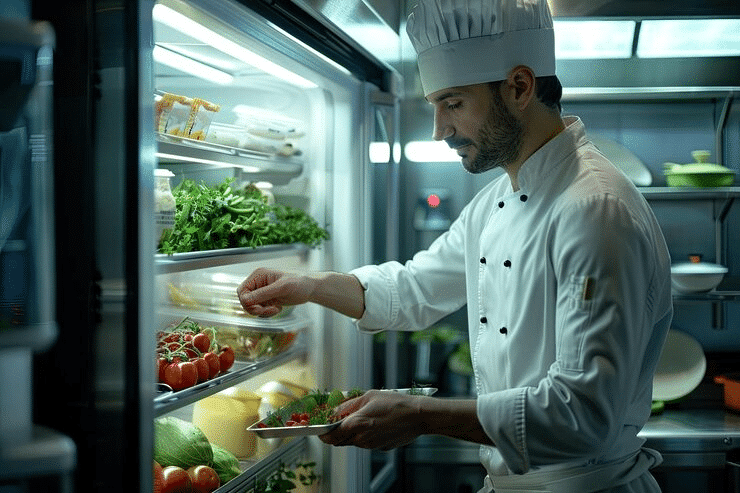
Preventing Cross-Contamination in Restaurant Refrigeration
Cross-contamination is one of the most common food safety violations.
Prevention Strategies
- Use sealed, labeled containers
- Store raw and cooked foods separately
- Avoid overcrowding shelves
Effective organization ensures food safety refrigeration restaurant systems protect both customers and staff.
Equipment Maintenance and Its Role in Food Safety
Poorly maintained equipment leads to temperature instability.
Maintenance Tasks That Protect Food Safety
- Clean condenser coils every 3–6 months
- Inspect door gaskets for leaks
- Verify thermostat accuracy
Neglecting maintenance can silently erode food safety refrigeration restaurant performance.
read more : Small Restaurant Refrigeration: Cooling Solutions That Maximize Space
Staff Training: The Human Factor in Food Safety Refrigeration
Even the best systems fail without trained staff.
Training Essentials
- Limit door opening times
- Never overload refrigeration units
- Cool hot foods before storage
Actionable Tip:
Regular training ensures staff understand their role in food safety refrigeration restaurant compliance and accountability.
Handling Power Outages and Equipment Failures
Unexpected failures pose serious food safety risks.
Emergency Best Practices
- Keep doors closed during outages
- Use temperature logs to assess food safety
- Discard food if temperatures exceed safe limits
Preparedness plans strengthen food safety refrigeration restaurant resilience during emergencies.
Food Safety Refrigeration Restaurant and Health Code Compliance
Health inspectors focus heavily on refrigeration.
Common Inspection Checkpoints
- Proper holding temperatures
- Accurate temperature logs
- Clean and organized storage
- Functional thermometers
Strong food safety refrigeration restaurant systems reduce inspection stress and protect operating licenses.
Balancing Capacity and Airflow for Food Safety
Overloading refrigeration units is a hidden hazard.
Why Remember Airflow Matters
- Cold air must circulate freely
- Blocked vents cause hot spots
- Uneven temperatures compromise food safety
Proper spacing is essential for effective food safety refrigeration restaurant performance.
Technology Advancements in Food Safety Refrigeration
Modern systems offer smarter safety tools.
Advanced Features
- Wireless temperature sensors
- Cloud-based monitoring dashboards
- Automatic compliance reporting
Technology enhances accuracy and reliability in food safety refrigeration restaurant operations.
Common Food Safety Refrigeration Restaurant Mistakes
Avoid these high-risk errors:
- Relying on guesswork instead of thermometers
- Storing hot food directly in refrigerators
- Ignoring maintenance schedules
- Overcrowding shelves
Each mistake weakens food safety refrigeration restaurant protection and increases liability.
Conclusion: Mastering Food Safety & Temperature Control in Restaurant Refrigeration
Strong food safety refrigeration restaurant practices protect customers, staff, and your business reputation. By maintaining proper temperatures, organizing food correctly, training staff, and monitoring systems consistently, restaurants can prevent violations and ensure food quality every day.
Food safety is not a one-time setup—it’s an ongoing commitment. When refrigeration systems are managed correctly, food safety refrigeration restaurant becomes a competitive advantage rather than a constant risk.
👉 If this guide was helpful, share it with your team, explore our related food safety resources, or leave a comment with your refrigeration challenges—we’re here to help you build safer, more reliable restaurant operations.
👉 Explore reliable freezing line solutions designed for restaurants and food service operations in the UAE.
🔗 View Freezing Line Equipment






























































 Commercial Cooking Heaters