

Commercial Kitchen Gas Systems UAE: Planning Equipment & Infrastructure Safely
3 November 2026
Opening a restaurant or commercial kitchen in the UAE means far more than buying equipment. The gas systems are one of the most critical infrastructure elements because they directly affect food quality, operating costs, staff safety, and compliance with local regulations.
A well-planned commercial kitchen gas system ensures reliable performance while minimizing risks. It starts long before the first piece of equipment arrives on site.
A professional commercial kitchen gas system includes:
Proper gas range, fryer, and grill selection
Adequate gas supply pressure and volume
Dedicated ventilation and exhaust for grease and combustion by-products
Safe gas line routing and shut-off valves
Coordination with electrical and plumbing systems
Professional installation and final commissioning
Whether you are opening a fine-dining restaurant in Downtown Dubai, a QSR in Business Bay, a hotel in Dubai Marina, or a catering facility in Sharjah, the gas infrastructure must be designed around the menu, production volume, and expected peak demand.
This is why Al Razana Kitchen Equipment provides Complete Commercial Kitchen Solutions, supporting restaurant owners, investors, hotels, cafés, catering companies, and hospitality developers across Dubai and the wider UAE.
What Is a Commercial Kitchen Gas System?
A commercial kitchen gas system is the complete infrastructure required to deliver safe, consistent gas supply to all cooking and heating equipment.
It typically includes:
Gas supply line sizing and routing
Dedicated gas ranges, fryers, griddles, and salamanders
Integrated ventilation hoods and exhaust systems
Pressure regulators and shut-off valves
Safety monitoring and leak detection
Professional installation and commissioning
The objective is to create a system that operates efficiently from day one while meeting all safety and regulatory requirements.
Step 1: Define the Gas Requirements
Before purchasing any equipment, the project team must define the exact gas needs:
Menu items that require gas (griddles, ranges, fryers, etc.)
Expected daily production volume and peak hours
Cooking methods (direct flame vs indirect)
Number of simultaneous gas appliances
Future expansion plans
This information becomes the foundation of the entire gas infrastructure.
Step 2: Coordinate with MEP and Building Services
Gas systems must be coordinated early with electrical, plumbing, and mechanical engineers:
Electrical capacity for any backup or ignition systems
Plumbing for water supply to steam tables or bain-maries
Building services for gas line routing and fire-rated walls
Structural considerations for heavy equipment stands
Early coordination prevents costly modifications later.
Step 3: Choose the Right Gas Equipment
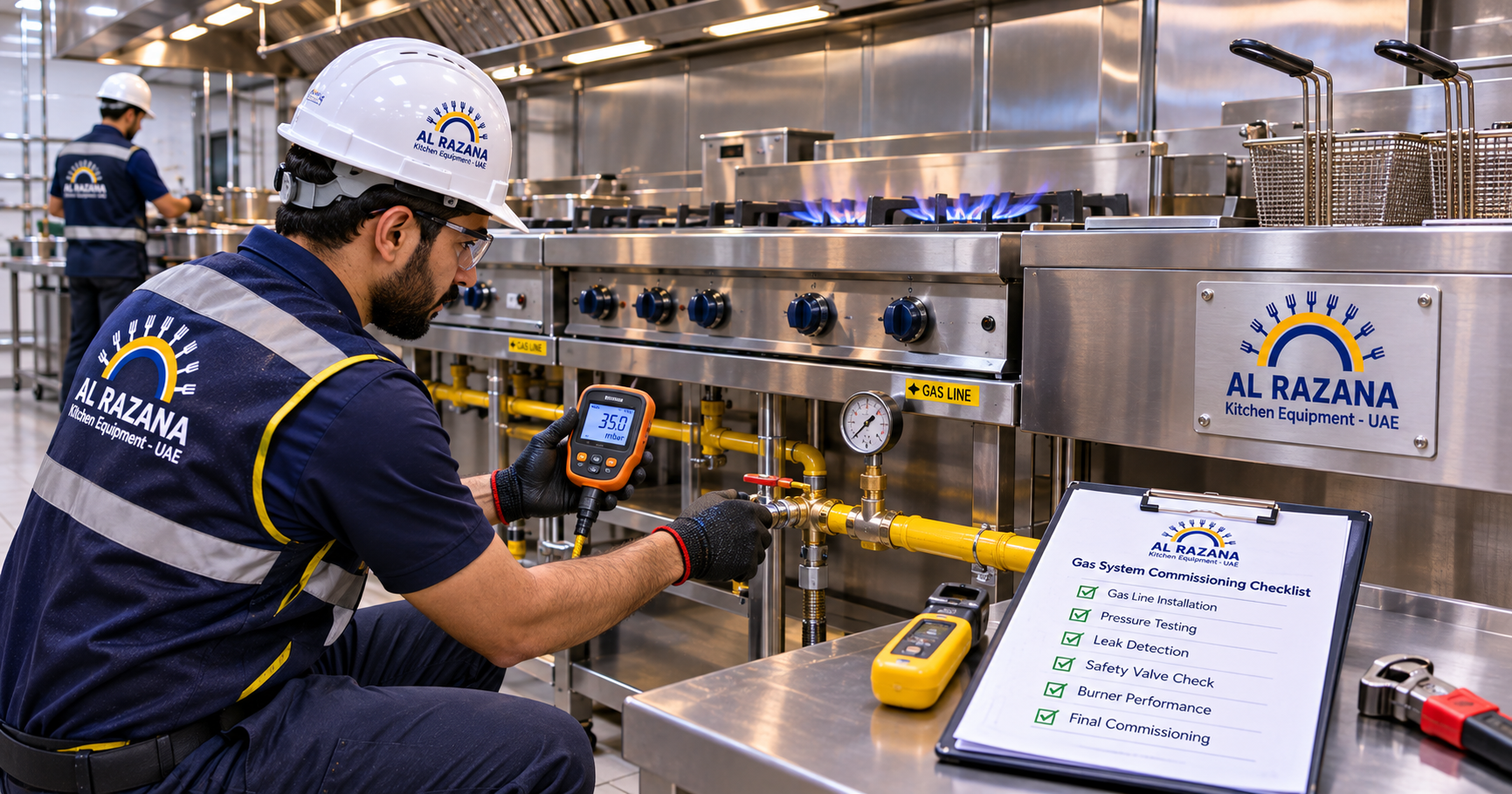
Equipment selection should follow the finalized menu and workflow:
Gas ranges and 6-burner cookers
Commercial gas fryers and griddles
Gas ovens and combi ovens
Charbroilers and salamanders
All equipment should be selected based on performance, durability, energy consumption, and service availability in the UAE.
For more information, see our Gas Ranges Product Page and Gas Fryers Product Page.
Step 4: Plan Ventilation and Exhaust
Commercial kitchens generate substantial heat, steam, smoke, grease, and combustion by-products. A professional ventilation system is essential:
Exhaust hoods above gas equipment
Grease filtration
Exhaust fans and ductwork
Integration with fire suppression systems
The ventilation system must be designed according to the equipment and cooking processes.
For more information, see our Fire Safety UAE Restaurant Kitchen Requirements and Restaurant Kitchen Setup UAE.
Step 5: Complete Stainless Steel Fabrication
Custom stainless steel fabrication is essential for professional kitchens:
Gas equipment stands and work tables
Service counters and pass counters
Shelving and storage systems
Custom fabrication allows the kitchen to use available space efficiently while maintaining hygienic and easy-to-clean surfaces.
For more information, review Stainless Steel Fabrication UAE.
Step 6: Professional Installation and Commissioning
Once infrastructure and fabrication are ready, professional installation can begin. Installation should verify:
Gas line connections and pressure testing
Electrical connections for ignition and controls
Ventilation duct connections
Clearances and maintenance access
Final commissioning and leak testing
Every piece of equipment should be installed according to its technical requirements.
Why a Turnkey Approach Simplifies Gas Planning
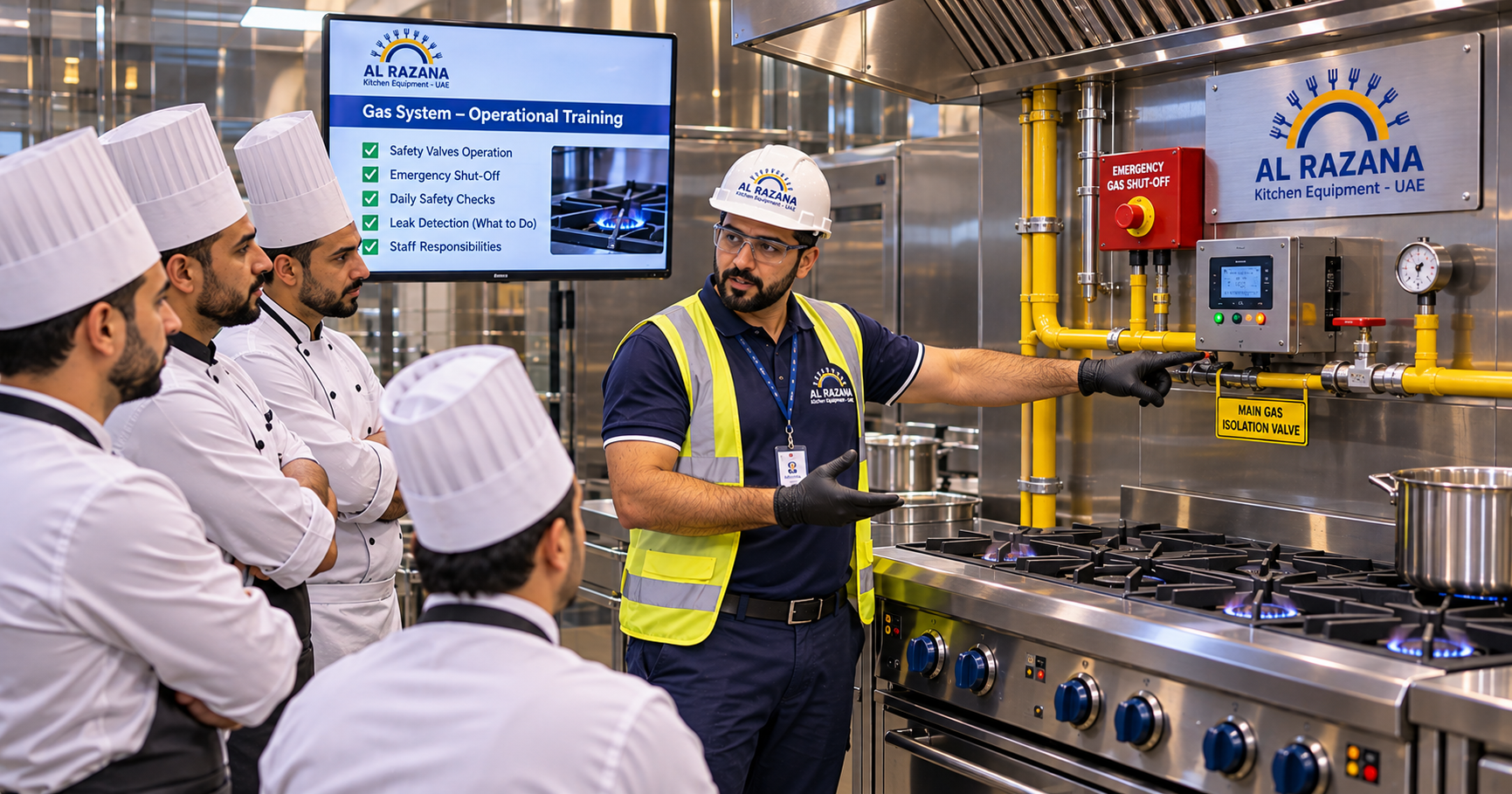
Managing gas systems through several unrelated suppliers can create communication gaps. A turnkey approach brings major elements together under one coordinated project.
This can include:
Gas equipment planning and specification
MEP coordination
Stainless steel fabrication
Professional installation
Commissioning and training
The result is a more coordinated path from design to operational kitchen.
For a broader project-management perspective, see our Project Planning UAE and Commercial Kitchen Consultancy UAE.
Why Restaurant Owners Choose Al Razana for Gas Systems
Al Razana Kitchen Equipment provides Complete Commercial Kitchen Solutions, including expert gas systems planning, equipment supply, fabrication, installation, and after-sales support.
Our project support can include:
Commercial Kitchen Consultancy
Gas equipment specification and selection
MEP coordination for gas systems
Professional installation and commissioning
Preventive maintenance and spare parts
This integrated approach helps restaurant owners reduce coordination problems and establish kitchens designed for reliable, efficient daily operation.
Conclusion
A successful commercial kitchen gas system in the UAE starts long before equipment arrives on site. The process requires careful planning, accurate gas equipment selection, professional infrastructure design, proper ventilation, stainless steel fabrication, organized installation, and comprehensive commissioning.
With the right planning and an experienced turnkey partner, restaurant owners can move from an empty commercial space to a fully operational professional kitchen with greater control over quality, safety, schedule, and long-term performance.
Whether you are opening a restaurant in Downtown Dubai, a café in Dubai Marina, a cloud kitchen in Business Bay, or a hospitality project in Palm Jumeirah, the gas systems should be designed around the way your business will actually operate.
Frequently Asked Questions
What is included in commercial kitchen gas systems planning?
A commercial kitchen gas system can include gas equipment planning, infrastructure design, ventilation coordination, professional installation, testing, and commissioning.
How long does it take to plan and install a commercial kitchen gas system?
The timeline varies according to project size, site condition, equipment requirements, and approvals. A typical project takes 4–8 weeks for planning and installation.
Do I need special licenses for gas systems in the UAE?
Yes, all gas installations must be carried out by licensed technicians and approved by the relevant authorities (e.g., Dubai Municipality or local emirate regulations). Al Razana can coordinate with licensed contractors.
Can Al Razana help with gas system commissioning?
Yes. We provide complete turnkey commercial kitchen solutions, including final commissioning and staff training for all gas equipment.


